


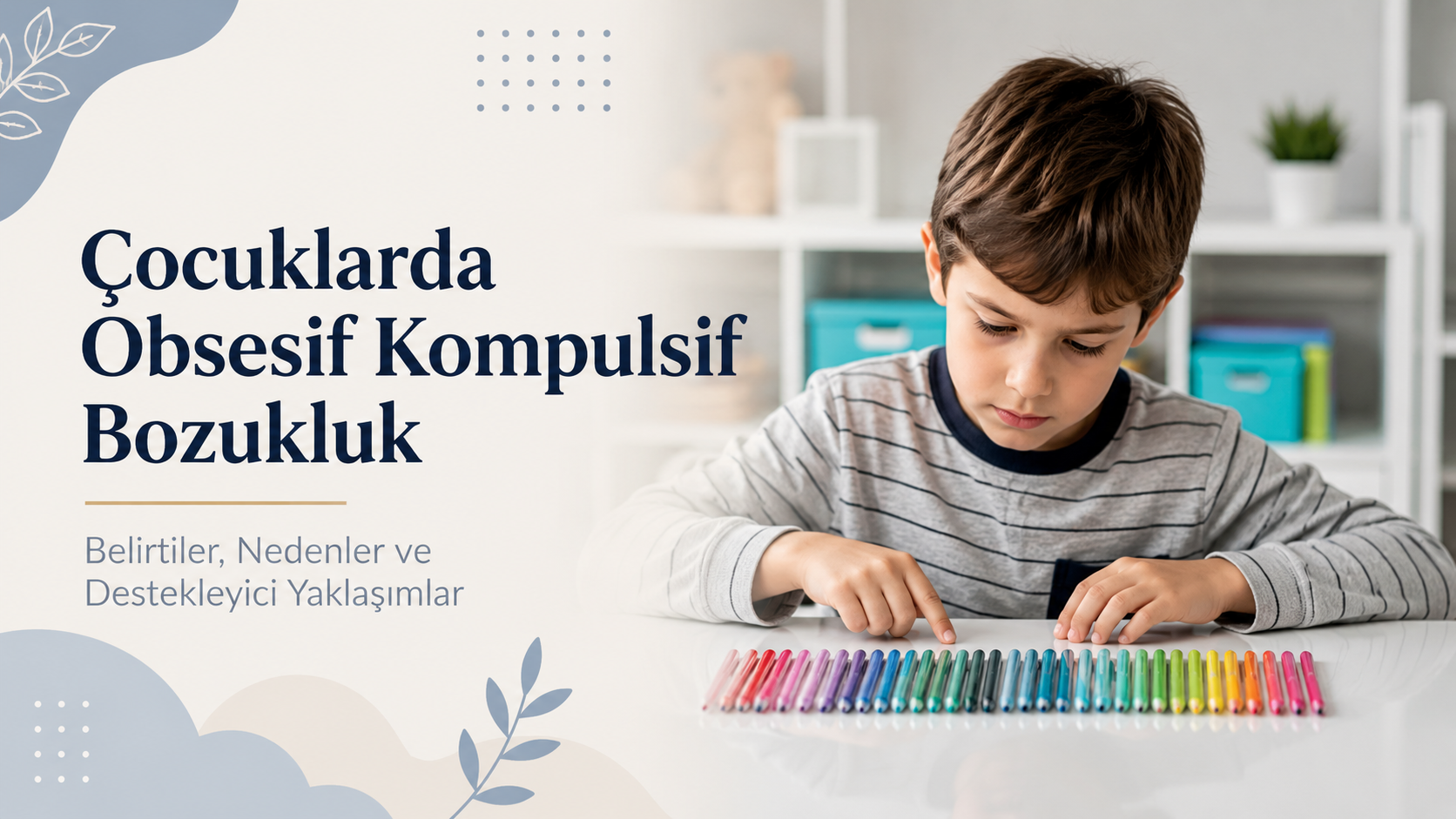
“Some children may feel compelled to repeat the same behavior over and over again to feel at ease. This is often not just a habit, but a reflection of intense anxiety.”
What Is Obsessive-Compulsive Disorder in Children?
Obsessive-compulsive disorder (OCD) in children is a psychiatric condition characterized by intense, involuntary thoughts that intrude into a child’s mind and repetitive behaviors the child performs to reduce the anxiety caused by these thoughts.
Obsessions can be described as thoughts, fears, or images that arise involuntarily and distress the child. Compulsions, on the other hand, are repetitive behaviors performed to reduce this anxiety.
Some children may wash their hands repeatedly, want to arrange their belongings in a specific order, or ask the same questions over and over. These behaviors may sometimes seem like mere habits. However, if they interfere with daily life, they should be carefully evaluated.
Symptoms of obsessive-compulsive disorder in children can manifest in different ways depending on their age. Symptoms may become more pronounced, especially during the school years.
What Are the Symptoms of Obsessive-Compulsive Disorder in Children?
Obsessive-compulsive disorder may not manifest in the same way in every child. While intrusive thoughts may be the primary symptom in some children, repetitive behaviors may be more prominent in others.
Common symptoms include:
- Washing your hands constantly
- The need to keep belongings organized in a specific way
- Compulsive checking behaviors
- Don’t ask the same questions over and over again
- Living in fear of catching germs
- Checking the door, bag, or toys over and over again
- Repeating certain words or phrases
- A strong need for symmetry and order
- Doing things over and over again out of fear of making a mistake
- An increase in anxiety leads to a resurgence of these behaviors
If these behaviors affect the child’s daily life, school performance, or social relationships, it is important to have them evaluated.
What Causes Obsessive-Compulsive Disorder in Children?
Many different factors can play a role in the development of OCD. Genetic predisposition, anxiety levels, and environmental stressors can all influence this process.
Intense Anxiety and the Need for Control
Some children may experience intense anxiety in the face of uncertainty. Repetitive behaviors may cause the child to feel a brief sense of relief.
However, since this relief is temporary, the behavior may continue to recur.
A Tendency Toward Perfectionism
Some children may be intensely afraid of making mistakes. They may think that everything has to be “exactly right.”
This situation may lead to an increase in rechecking behaviors.
Stressful Life Events
A change in schools, family stress, test anxiety, or intense pressure can cause symptoms to worsen in some children.
Repetitive behaviors may become more pronounced, especially when anxiety levels rise.
“Repetitive behaviors exhibited by children often arise not for pleasure, but to reduce their anxiety.”
Emotional Regulation Difficulties
Some children may have trouble managing their intense thoughts. For this reason, engaging in certain behaviors can help them feel safer.
Although this process may appear to be a behavior the child engages in voluntarily, it is often associated with intense internal anxiety.
How Does OCD Affect School and Social Life?
Obsessive-compulsive disorder can make school life difficult for some children.
A child may feel the constant need to check their work during class, may redo their homework over and over, or may slow down due to a fear of making mistakes.
Some children may try to hide their behavior because they think they won’t be understood by their friends. Over time, this can increase their social anxiety.
How Can We Support Children with Obsessive-Compulsive Disorder?
It is important not to dismiss a child’s behavior as merely “stubbornness” or “habit.”
Try to Understand Anxiety
A child may often feel intense distress when they are unable to repeat their actions.
Instead of taking a judgmental approach, it is important to try to understand the anxiety the child is experiencing.
Avoid an Embarrassing Approach
Phrases that put pressure on someone, such as “Why are you doing this?” or “Just stop it already,” can increase anxiety.
Children should be encouraged to speak freely.
Support Routine and a Sense of Security
Regular daily routines can help reduce anxiety in some children.
Predictable environments can help children feel safer.
Give Them Space to Express Their Feelings
It is important for children to be able to talk about their fears and anxieties.
Children who feel understood can express their emotions in a healthier way.
Behaviors Families Should Avoid
Certain parenting behaviors may unintentionally lead to an increase in symptoms.
- To embarrass a child
- Constantly criticizing
- To make fun of someone’s behavior
- Downplaying her anxiety
- To put excessive pressure on
- Labeling someone as “obsessive”
- Adopting a highly punitive approach
A calm and supportive approach can help the child feel more secure.
When Should You Seek Professional Help?
If symptoms of obsessive-compulsive disorder in children persist for a long time and affect the child’s daily life, an evaluation by a specialist may be helpful.
It may be advisable to seek support in the following situations:
- If the repetitive behaviors continue intensely
- If it affects school life
- If it causes difficulties in social relationships
- If a child is experiencing severe anxiety
- If daily functioning is significantly affected,
- If the behaviors are increasing over time
Receiving support early on can help provide a better understanding of the anxiety the child is experiencing.
Does Obsessive-Compulsive Disorder Go Away in Children?
Symptoms of OCD in children can be managed with appropriate support and an evaluation process.
Every child’s needs and symptoms are different. That is why an individual assessment is important.
A supportive family approach and early intervention can have a positive impact on a child’s quality of life.
Get Professional Support
If you think your child’s obsessive and repetitive behaviors are affecting their daily life, it’s important to seek support early on.
👉 To contact us via WhatsApp,
Click here.
👉 For more information
You can visit our Contact Us page.


