


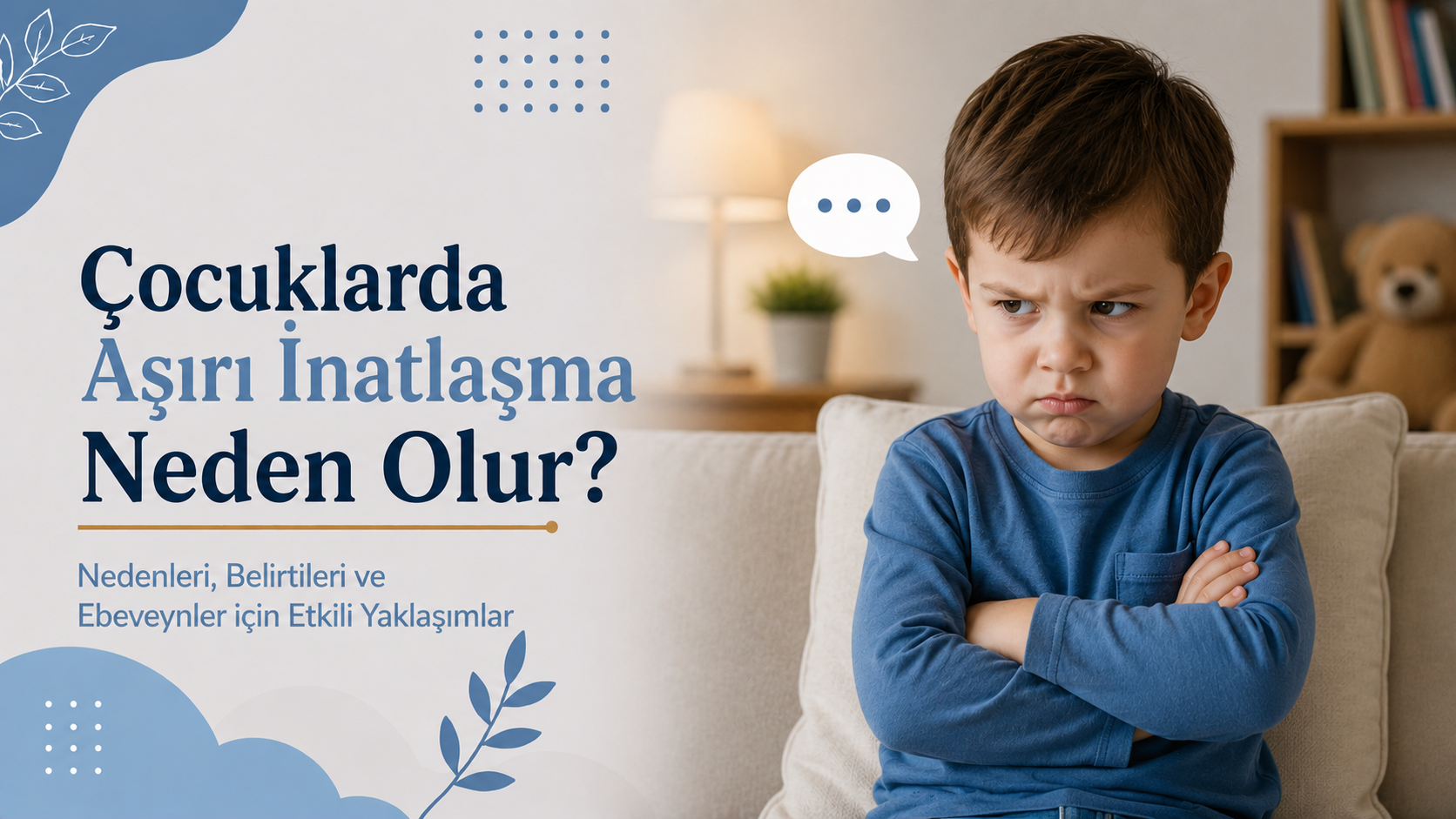
“In some children, defiance may be a natural part of development. However, the intensity of the behavior and its impact on daily life should be carefully assessed.”
What Is Excessive Stubbornness in Children?
Excessive stubbornness in children can manifest as intense resistance when their wishes are not met, constant defiance of rules, and frequent conflicts in daily life. A certain degree of stubbornness, particularly during the preschool years, can be viewed as a natural part of development.
As children grow up, they may want to make their own decisions and act independently. This process can sometimes lead to disagreements with their parents.
However, if a child’s excessive stubbornness becomes a persistent issue, strains family relationships, and affects the child’s social life, it may require closer evaluation.
Behind stubbornness, there are often not only behavioral reasons but also emotional needs.
What Are the Signs of Excessive Stubbornness in Children?
Excessive stubbornness in children can manifest in various ways. While some children show resistance only in certain situations, in others this behavior can extend to most of the day.
Common symptoms include:
- Exhibiting persistent defiant behavior
- Difficulty following simple rules
- Having difficulty accepting “no” as an answer
- Displaying intense anger
- Experiencing a crisis when their wishes aren’t fulfilled
- Avoiding Responsibilities
- Resistance to compromise
- Frequently having arguments with adults
- Exhibiting rule-testing behavior
- Experiencing intense conflicts in daily routines
If these symptoms persist for a long time and interfere with daily life, it may be helpful to have them evaluated.
What Causes Excessive Stubbornness in Children?
Excessive stubbornness in children can stem from many different causes. Understanding the underlying cause of the behavior is crucial to finding a solution.
Desire to Develop Independence
Children, especially during the preschool years, may want to make their own decisions and feel in control.
This process can sometimes be seen as stubborn behavior.
Inconsistent Boundaries
Allowing a certain behavior one day and prohibiting it the next can lead children to constantly test boundaries.
Consistent rules can help children feel safer.
Difficulty Expressing Emotions
Some children may have trouble expressing their feelings, such as sadness, disappointment, or anger.
In this situation, excessive stubbornness in children can become a form of emotional expression.
“Children’s behavior often reflects emotions they want to express but are unable to put into words.”
The Need for Attention
Some children may try to express their need for attention and care through defiant behavior.
Even negative attention can become a source of interest for a child.
High-Stress and Change Processes
Starting school, the birth of a sibling, moving, or changes within the family can lead to behavioral changes in some children.
During these processes, excessive stubbornness in children may become more pronounced.
How Can Excessive Stubbornness in Children Be Managed?
When children exhibit excessive stubbornness, reassuring and consistent methods should be preferred over punitive approaches.
Establish Consistent Rules
Clear and understandable rules can help a child better understand what is expected of them.
It is important for parents to take a unified approach.
Grant the Right to Vote
Offering a child age-appropriate choices can help satisfy their need for control in a healthy way.
This approach can help reduce conflicts.
Help Them Express Their Feelings
It is important to help children identify and express their emotions.
Children who feel understood may find it easier to cooperate.
Notice Positive Behaviors
Instead of focusing solely on negative behaviors, it is important to recognize positive behaviors as well.
This approach can help increase positive behavior.
Behaviors Families Should Avoid
Certain parenting styles can unintentionally increase defiant behavior.
- Constantly yelling
- Adopting an overly punitive approach
- Applying inconsistent rules
- Comparing a child to others
- To get into a power struggle
- Reacting strongly to every action
- Downplaying one’s feelings
A calm and consistent approach can play an important role in managing excessive stubbornness in children.
When Should You Seek Professional Help?
If a child’s excessive stubbornness persists for a long time and significantly affects daily life, a professional evaluation may be helpful.
It may be advisable to seek support in the following situations:
- If there are severe anger outbursts
- If school life is affected
- If family relationships are under serious strain
- If there are problems in social relationships
- If it becomes noticeably more difficult to comply with the rules
- If the behavior is becoming increasingly severe
Receiving support early on can help both the child and the family manage the process more effectively.
Does Excessive Stubbornness in Children Go Away?
In many children, defiant behavior may decrease as they continue to develop.
However, if excessive stubbornness in children persists for a long time and affects their quality of life, a professional evaluation may be necessary.
A patient, consistent, and understanding approach can support a child’s emotional development.
Get Professional Support
If you feel that your child’s excessive stubbornness is making daily life difficult, seeking professional help may be beneficial.
👉 To contact us via WhatsApp,
Click here.
👉 For more information
You can visit our Contact Us page.


