


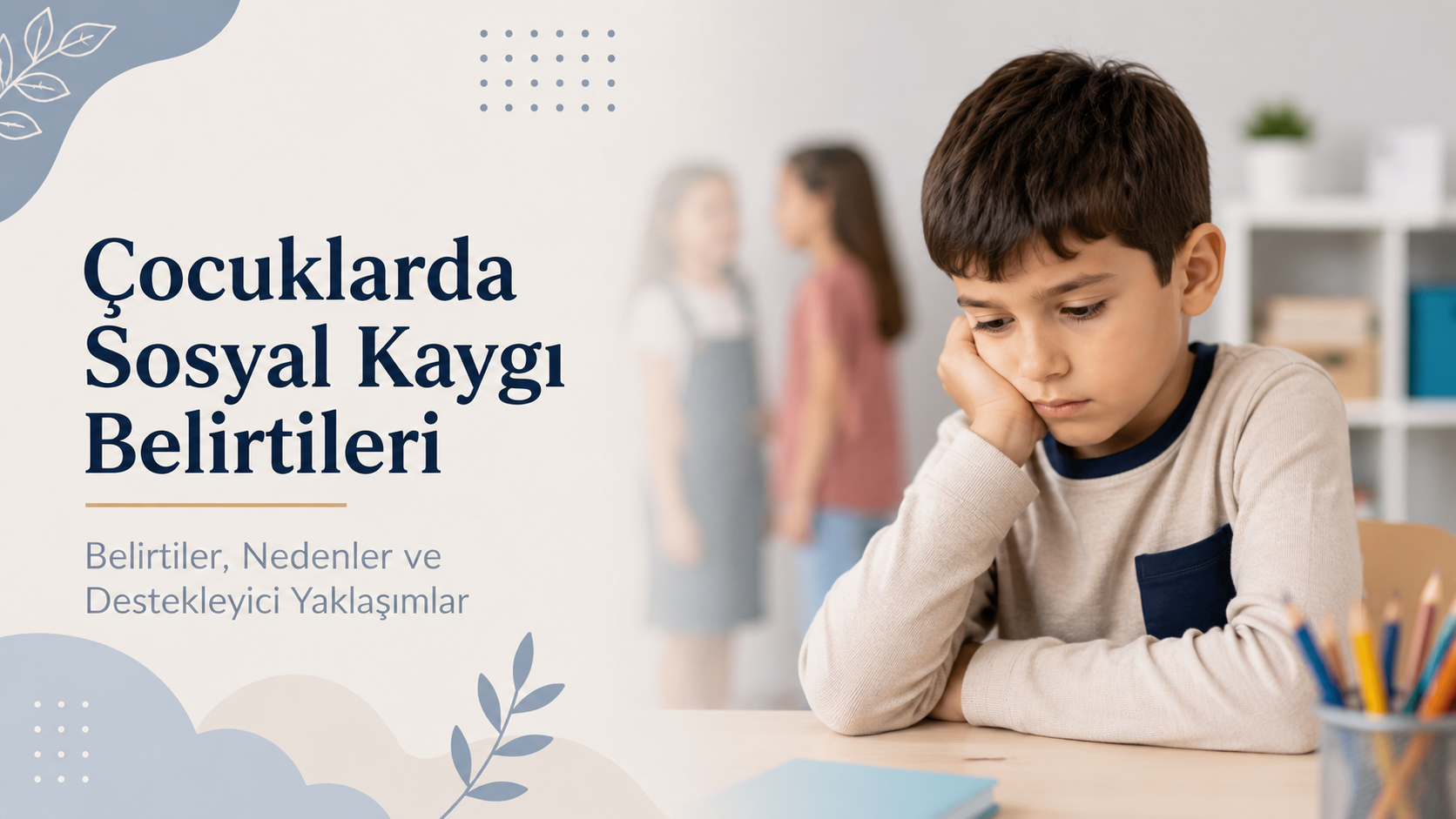
“Some children aren’t just shy in social situations; they may experience an intense fear of being judged.”
What Is Social Anxiety in Children?
Social anxiety in children is a condition characterized by a child experiencing intense feelings of embarrassment, fear of making mistakes, or fear of being criticized in social situations. Symptoms may become more apparent, particularly during the school years as social expectations increase.
Some children may be reluctant to speak up in class, may avoid speaking in front of a group, or may experience intense anxiety when interacting with new people.
Not every shy child necessarily experiences social anxiety. However, if social fears are affecting a child’s daily life, school performance, and friendships, they should be carefully evaluated.
Children who experience social anxiety are often misunderstood. Although their quiet demeanor may sometimes lead them to be seen as “well-behaved children,” they may be feeling intense anxiety inside.
What Are the Signs of Social Anxiety in Children?
Symptoms of social anxiety can manifest differently in each child. While some children may avoid social situations entirely, others may experience intense physical symptoms.
Common symptoms include:
- Avoiding speaking in public
- My reluctance to speak up in class
- Intense shyness when meeting new people
- Staying in the background among friends
- Living with the fear of criticism
- Excessive anxiety when giving a presentation
- An intense sense of shame
- Avoiding social situations
- Feeling uneasy in crowded places
- Physical symptoms such as abdominal pain or nausea
Some children may experience intense anxiety before entering social settings, and this can also affect their school performance.
What Causes Social Anxiety in Children?
Many different factors can play a role in the development of social anxiety. A child’s temperament, life experiences, and environmental factors can all influence this process.
Fear of Being Criticized
Some children may think they will be harshly judged when they make a mistake.
Over time, this fear can develop into a tendency to avoid social situations.
A Tendency Toward Perfectionism
The desire to do everything perfectly can create a strong sense of pressure in some children.
The fear of making a mistake can increase anxiety in social situations.
Negative Social Experiences
Experiences such as being teased, excluded, or bullied can lead to the development of social anxiety in some children.
Sensitive children, in particular, may be more deeply affected by these situations.
“Children who experience social anxiety often don’t want to draw attention to themselves; on the contrary, they may be afraid of being noticed.”
The Family Approach and Pressure
Children who are constantly criticized or who feel intense pressure to succeed may experience more anxiety in social situations.
A comparative approach can have a negative impact on a child’s self-confidence.
How Does Social Anxiety Affect School Life?
Children who experience social anxiety may have difficulty expressing themselves in a school setting.
Some children may avoid answering even questions they know the answers to, or may experience intense stress when performing tasks that require them to demonstrate their abilities.
They may take a back seat in friendships, become isolated, or withdraw from social activities.
How Can We Help Children Cope with Social Anxiety?
It is important to approach children who experience social anxiety without downplaying their feelings.
Try to Understand Their Anxiety
Phrases like “What’s there to be afraid of?” can make a child feel misunderstood.
An empathetic approach can help a child feel safer.
Support Small Social Initiatives
Instead of pushing the child all at once, it may be more helpful to create small, safe social experiences.
Taking things one step at a time can help build a child’s self-confidence.
Avoid Comparisons
Phrases like “Look how easily your friend is speaking” can increase anxiety.
Every child’s social development process is different.
Recognize Positive Efforts
Noticing a child’s small social initiatives can boost their motivation.
It is not just the results that should be supported, but also the effort put forth.
Behaviors Families Should Avoid
Certain parenting styles can unintentionally increase social anxiety.
- To embarrass a child
- Trying to force someone into a social setting
- Comparing Yourself to Others
- To adopt a strongly critical approach
- Downplaying her anxiety
- Labeling someone as “shy”
- To create excessive pressure
A supportive and understanding approach can have a positive impact on a child’s sense of social confidence.
When Should You Seek Professional Help?
If symptoms of social anxiety persist for a long time and affect the child’s daily life, a professional evaluation may be helpful.
It may be advisable to seek support in the following situations:
- If school life is significantly affected,
- If they completely avoid social situations
- If there are symptoms of severe physical anxiety
- If friendships are under serious strain
- If self-confidence issues are becoming apparent
- If your anxiety is gradually increasing
Receiving support early on can help foster a child’s social skills and self-confidence.
Does Social Anxiety Go Away in Children?
Social anxiety can be managed with the right support and a reassuring approach.
Every child has different needs. That is why individual assessment is important.
A patient, supportive, and understanding approach can help a child feel more at ease in social settings.
Get Professional Support
If you think your child is experiencing intense anxiety in social situations, it’s important to seek support early on.
👉 To contact us via WhatsApp,
Click here.
👉 For more information
You can visit our Contact Us page.


